A House of the Exchange: Cunda Milos
How the house they were born in became a house for guests
On Cunda, in the footsteps of a family Cretan on both sides, a new guest house: Milos Cunda…
The Şakar Family
Sıdıka and Halil Şakar, first-generation exchange migrants from Rethymno in Crete, were both born there — one arrived on Cunda at five years old, the other at three. (Among the Cretans they were known by the nicknames o Gonotis and i Rustembeyena; let us set that down too.) The first owners of Milos after the population exchange were the children and grandchildren of İbrahim Ağa Gonotis and Nazife Hanım Çıkudakis, who came from Crete and died here; they were born and raised in this house. Taking the surname “Şakar” under the Surname Law of 1935, the family has kept this house for more than a hundred years.
Let us begin the story with the grandmother and grandfather who left their mark on the house — the grandparents of Halil, Sıdıka and Fatma, who are bringing Milos to life today. Sıdıka and Halil Şakar are two treasured portraits, brought from Rethymno in Crete to Cunda in 1923 under the Treaty of Lausanne, in what is remembered as the largest exchange of populations the world has known.
Sıdıka Şakar — Queen of the Oud
Sıdıka Şakar, the grandmother, was one of the very few women playing the oud on Cunda in those years. When her uncle Derviş Bey recognised her gift, he arrived one day from Istanbul carrying an oud. Her eyes shone with joy. That instrument caused something of an earthquake on Cunda at the time — it was the first musical instrument ever to reach the island.
She was the queen of our famous Cretan dance, the pentozali. From that day until her death she played her oud. In those years, if there was a wedding on Cunda and Sıdıka did not spring onto the floor to dance a pentozali, the wedding was not considered a good one. She would take up the line with her brother Hüsnü, a handkerchief in her hand and her feet in the air; the pentozali would turn into pidihto. The leaping pentozali — bedozali…
One more detail: it is the olive harvest. Those with olive groves at Patrica move to their lodges at Pateriça between October and February. The olives are gathered all day; after supper, all the neighbours come together. The aposperida begins — it means the evening sitting. Every neighbour falls silent for the notes of Sıdıka's oud. To play an instrument, to dance and to sing on Cunda in the 1940s is proof of how cosmopolitan the Cretans were.
She raised three bright children: Nazife Şakar Anbarcı, Adile Şakar Baydere and İbrahim Şakar — to Brobro mas. We Cretans shrink our children's names to make them dearer. Bedozali meant Sıdıka. In her memory, we cannot pass on without one of the couplets she so often sang:
Alo horo de reğome okso to bedozali
apu tone horevğane oli mikri meğali“I care for no dance but the bedozali; for I know that everyone, young and old, has danced it.”
Halil Şakar — Olives, the Crew, and Reading Nights
Halil Şakar, the grandfather, was a most disciplined olive grower. No one sat a horse as well as he did. Say “the crew” and Halil comes to mind. At harvest time the largest crew from the villages of Balıkesir came to him, and every year his crew arrived first. The whole island was glad of it, my grandmother most of all — because Halil would send one or two of his crew to those who were struggling to bring in their own olives, and lend them a hand. He loved collective work and held labour in high regard.
I can never forget it; the steward of his crew was Baki. What fine days we had in that stavlo, in the lodge, with the working girls who picked the olives. The scent of the village bread they slid into the stone oven after the harvest is in my nostrils to this day. And the melon patches… the kabo smelled sweetly of melon and watermelon.
Halil was lettered, and that mattered a great deal. Reading nights were held in the very house in which you are now a guest. The pezula — the stone bench in the garden — was like a school, like a medrese. All the neighbours would be in the garden on the hour, so as not to miss a single instalment of the serialised novel he was to read that night. A living radio serial… Would you have Kemal Tahir, or Kerime Nadir? Whichever was running in Tercüman in those years… Tolstoy's Anna Karenina was read from the book itself; and Halil would translate on the spot for the first generation, who had no Turkish.
The pezula was like a school, like a medrese.
The newspaper reached the island once every three days. The causeway that causes today's crowding did not yet exist. This was one of the few houses that took the papers arriving by boat, by sea. That is why Halil was a father who cared about his children's education. School, an instrument, a craft… so long as they learned.
Nazife — Queen of the Mandolin
Nazife was the queen of the mandolin; she played so beautifully that everyone sought her out. “Let Nazife play Bekledim de Gelmedin”, “Let Nazife play Manolya”, “Let Nazife play the Pentozali”, “Let Nazife play Oso varun ta sidera” — and above all, let Nazifo play the samyotisa…
I cannot pass on without adding a memory. Nazife married into Karşıyaka in İzmir, to my dear Orhan — Orhan Anbarcı, a well-known antiquarian of the city. My father was an admirer of Nazife's mandolin playing. He would close his pharmacy in Soma to take my mother to the Göl Gazinosu at the İzmir Fair; and arriving in İzmir, he would turn the wheel straight for their house in Karşıyaka. Nazife would begin to play in the back of the car. Orhan would shut up his shop, and off they would all go to the Göl Gazinosu.
And what happened then? At the Göl Gazinosu the band fell silent, and my Nazife's mandolin finished the programme. She would carry the programme on in the car as well; and my father, from the telephone in the pharmacy, would hold up the receiver so my uncle could hear the songs. She had two children, Aylin and Mustafa; she has grandchildren of her own now.
Adile — The Road of Mathematics and Books
Adile Şakar was top of her year at Ayvalık High School in the 1960s, a master of mathematics. She was one of only a handful of students who went from Cunda to the high school in Ayvalık — and a girl, at that. She entered the İzmir Girls' Institute first in her class, became a mathematics teacher, and off to Uşak… And she brought us an intellectual brother-in-law: Cengiz Baydere, a teacher of French at the İzmir Girls' High School, who would later become a legend.
“Çi Sidikas o ğabros”… That Cretan phrase, so often echoing along our Karanfil Sokak, meant “Sıdıka's son-in-law”, and it was the first Cretan sentence Cengiz learned. How my mother loved him…
I must not forget: it was Adile who introduced me to Balzac. I was at secondary school, at the end of the 1960s. She gave me a book as a gift, and Honoré de Balzac's Eugénie Grandet shaped my life. The novel showed how greed for money, self-interest and the passions bear upon a human life. Cenker and Gözde are her two children. Cenker plays the guitar; he has a music studio and gives lessons. Her daughter Gözde has a beautiful voice and sings exquisitely.
İbrahim and Dilşat — The Two Pillars of the House
İbrahim Şakar is the father of the three siblings of the younger generation — Halil, Sıdıka and Fatma (I prefer to say Fatoş) — who are bringing to life the Milos in which we are about to be guests. To Brobro mas, our dear İbrahim… the craftsman of the family, a carpenter and master of furniture. As the only son, he was raised as the apple of every eye.
His wife, Dilşat Şakar, is the daughter of Fatma Hanım and Merohuso Ali Bey of the Kesebirs, the island's celebrated first-generation Cretan family; she is gracious, giving and steadfast, and a true Cretan herself — to Dilşo mas, our Dilşat. Dilşat came to this house as a bride, bore her children in it and raised them in it. Call on her and she will bury you in hospitality, insisting “for heaven's sake, for heaven's sake!”; she would never let you go without your coffee or your tea. Hospitable beyond measure…
The House on Karanfil Sokak
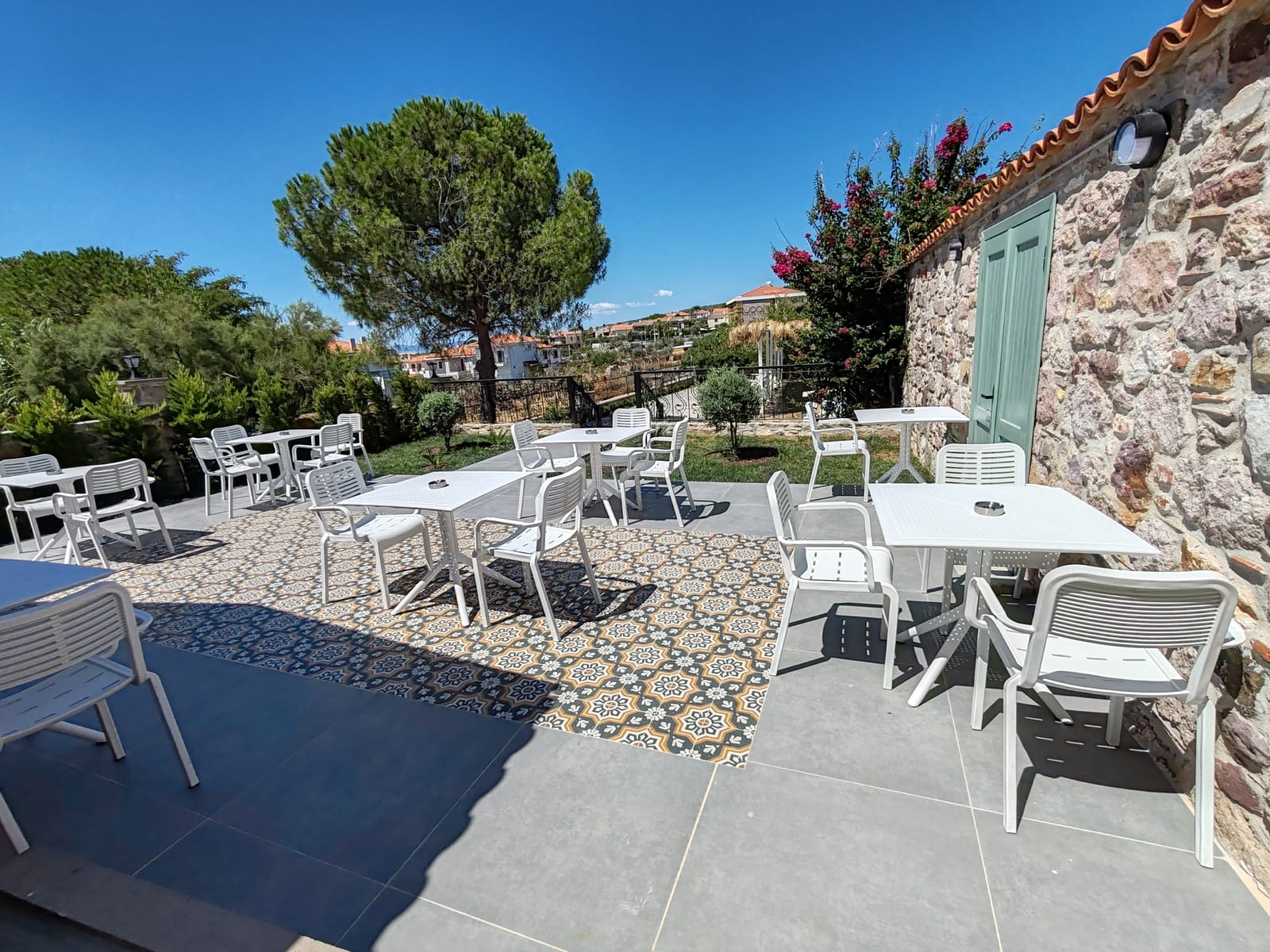
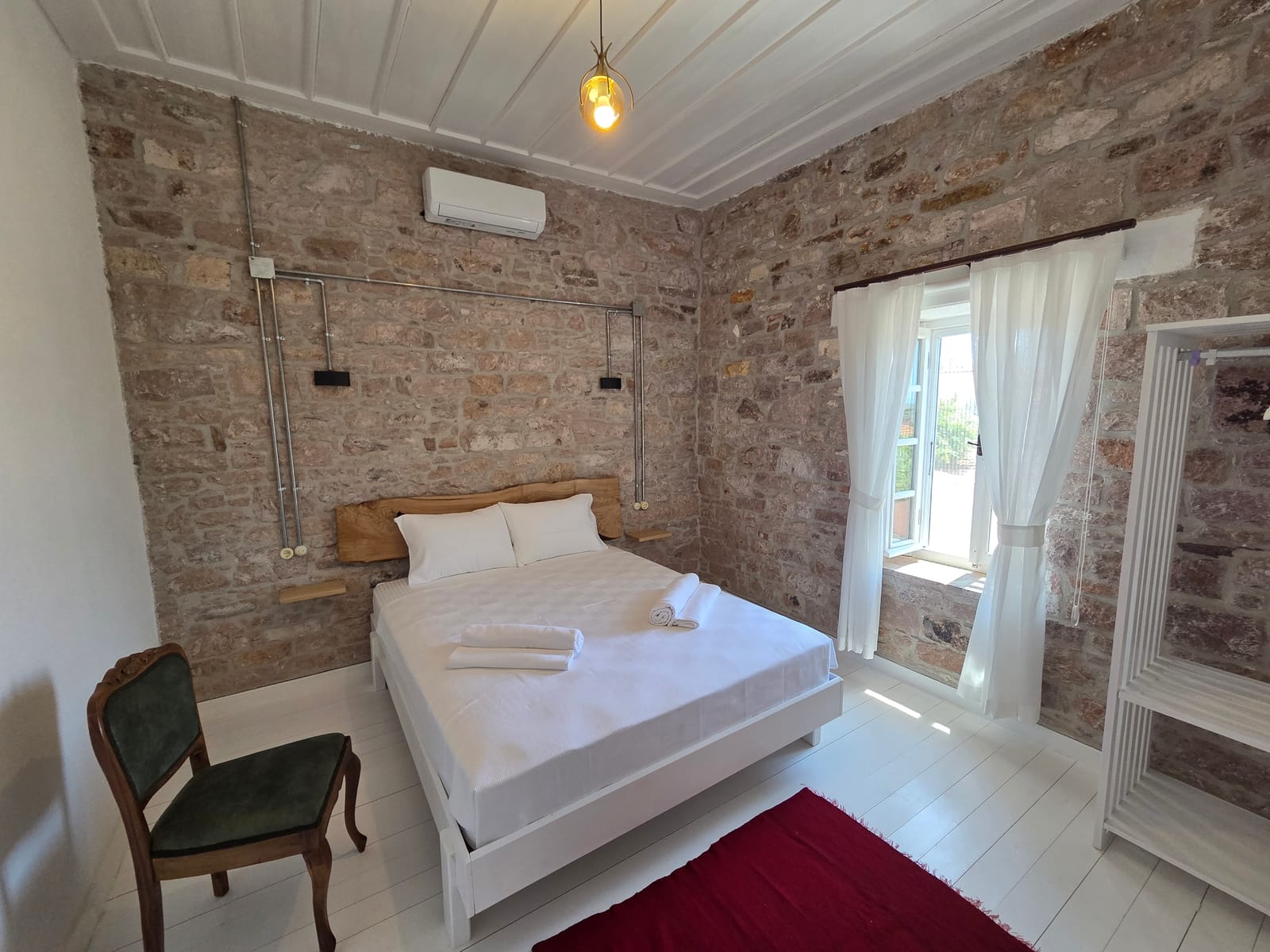
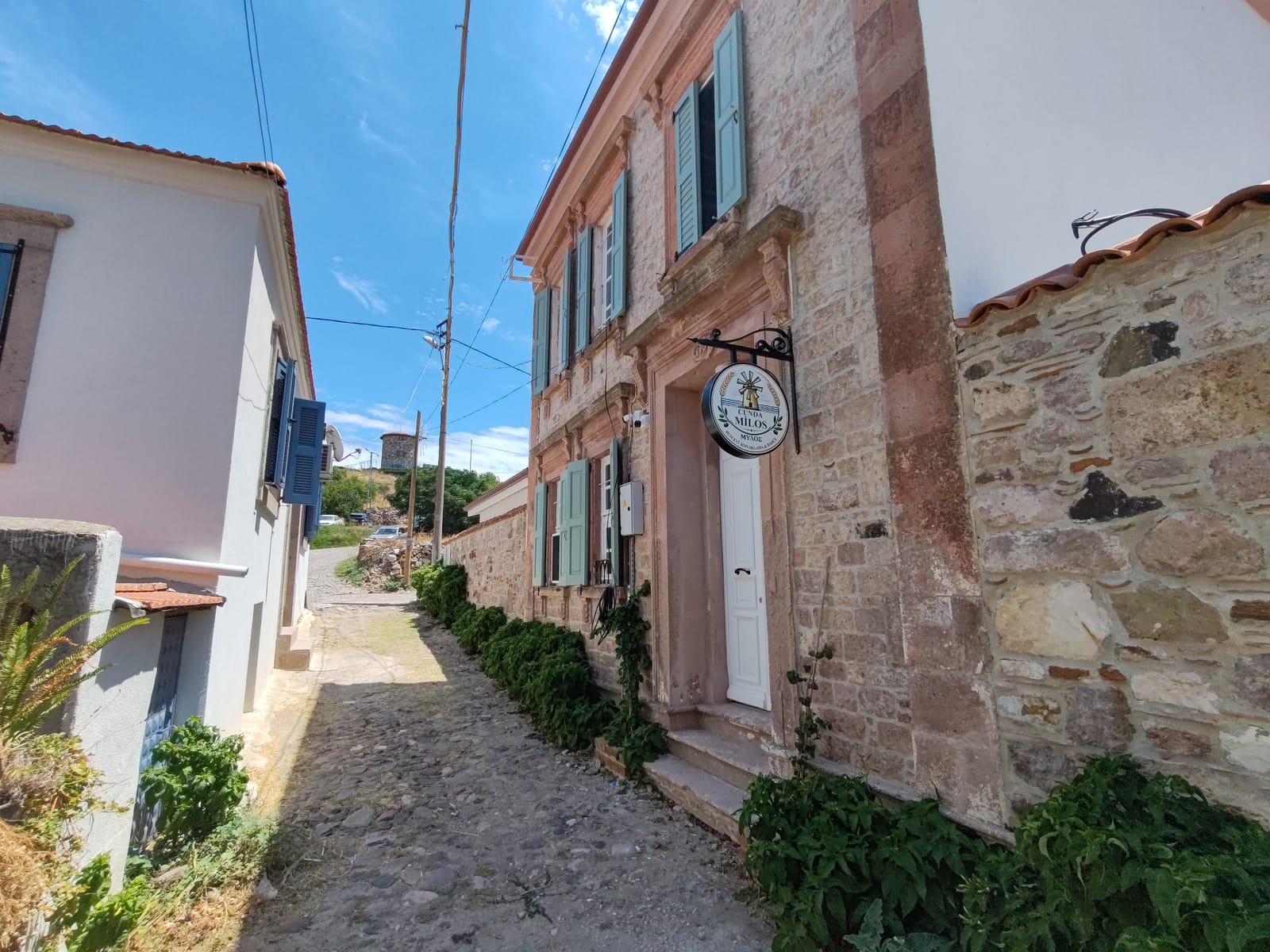
That is why the story of Milos Cunda is full of enchanting lived experience. Construction of this historic house on Karanfil Sokak began in the late 1800s and was completed in 1907. Standing within the conservation area of the old town, it has been restored faithfully to its original form and opened for your use — turned into a guest house where you can breathe in history and feel a certain warmth.
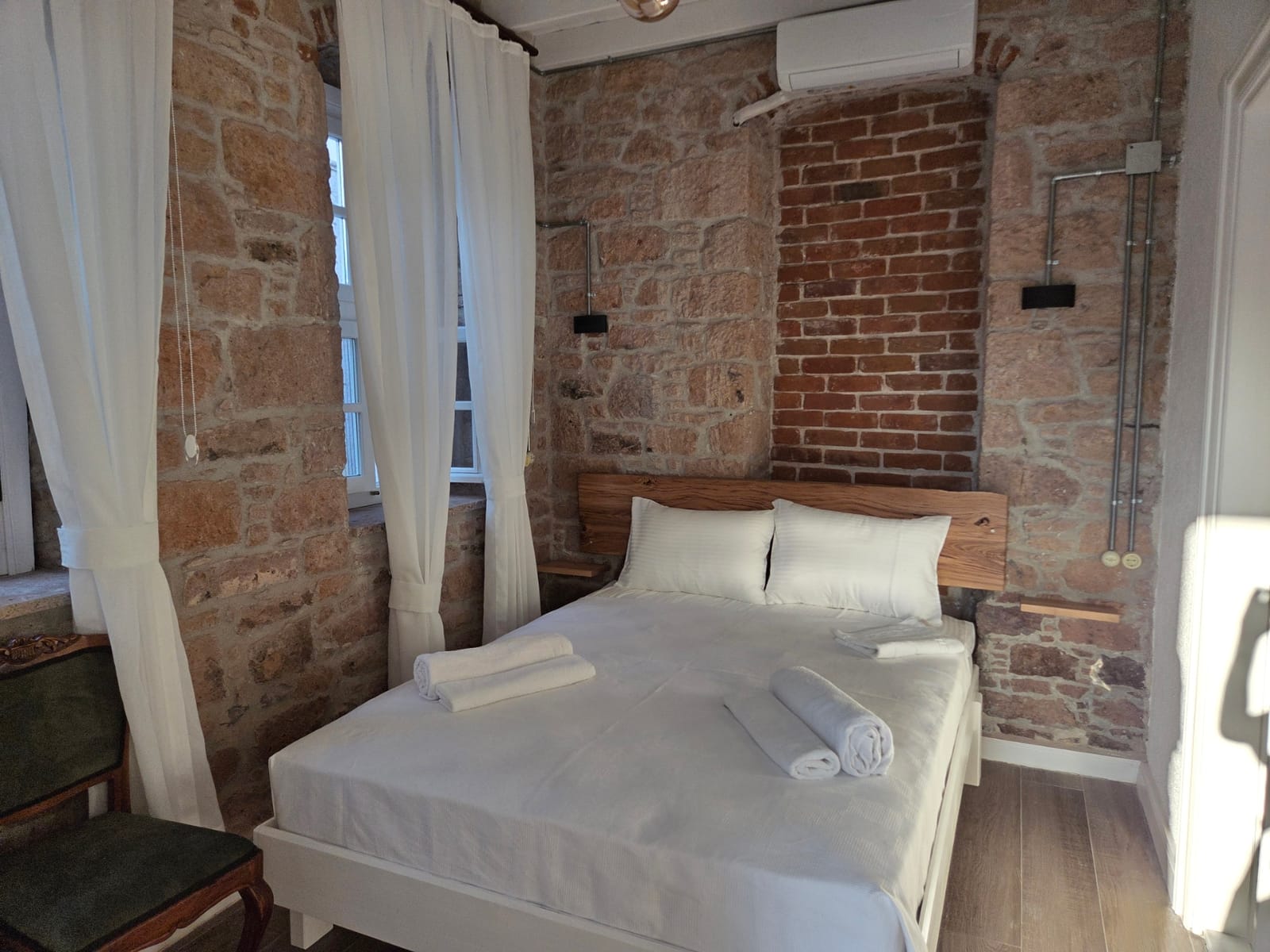
The hotel will be run by three siblings of the third generation of the Şakar family — Halil, Sıdıka and Fatoş. And here is something I should like to draw attention to: music runs in this family's blood. Sıdıka Şakar Onay trained in business administration; she dances like a swan. Her husband Volkan Onay plays the oud, the guitar and the bouzouki. Their children are Atakan and Ömer; Atakan plays the guitar. Halil Şakar is a graduate of the Faculty of Agriculture; Halil and his wife Tülin have two children, İbrahim Ege and İrem.
In the Şakar family, names such as İbrahim, Sıdıka and Fatoş recur; the tradition continues, and the names of grandmothers and grandfathers pass to the grandchildren. Fatma Şakar, my Fatoş, turned up years later as my sirtaki teacher. I was not surprised; she is a chemical engineer. She is a granddaughter who inherited Sıdıka's gift for dance, and she plays the bağlama too. In Ayvalık she sings and dances with Dans Ayvali and the Mübadele Choir, giving remarkable performances.
I believe we shall spend fine days in this enchanted atmosphere, offered to us by the grandchildren of a family that held education, reading, music, dance and song in such high regard.
“Ksaderfi”: One Word, a Whole Life
This word has always brought the Şakar family to my mind. It means “cousin”, and among Cretans it carries more weight even than the word for a sibling.
From the artichoke-strewn back garden of my grandmother's house on Karanfil Çıkmazı — now a ruin that pains me to think of — a small path took us to the pezula. When Halil called out “Ksaderfi!”, we understood: he and my grandmother were first cousins. Let the melons and watermelons come from the Limnes… And the couplets, that way of life no one would give up — i madinades. It would not do to close without a couplet from İbrahim Şakar:
İrthane tu mayi ta roda çe feran ton ayera
na droserepsun ta dendra pu tane maramenaThe roses of May have come and brought the wind with them, to cool the withered branches of the trees.
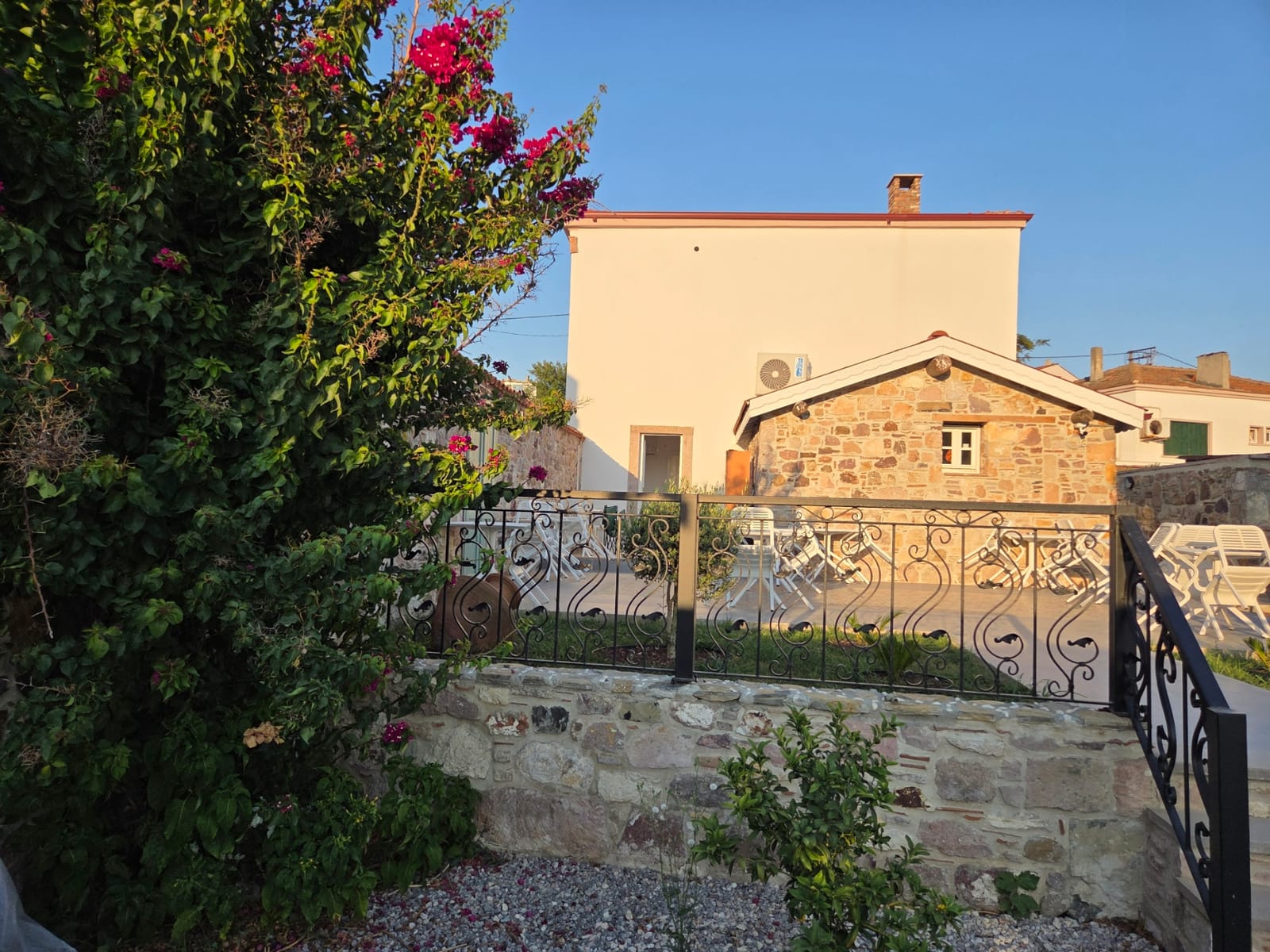
Such, then, is the story of the Şakar family and of Milos Cunda, which sealed my own childhood too. Every house has a story. May you gather fine memories of your own in this one's new chapter…
Every house has a story.
Welcome… Kalosorisete…