The Aegean coast of Turkey produces some of the world’s finest olive oil, and Cunda Island sits at the heart of this liquid gold tradition. The Ayvalık region’s olive groves — many centuries old — yield a distinctively fruity, low-acidity oil that forms the backbone of every meal. The island’s rich history is inseparable from its culinary identity.
The Olive Oil Culture
Ayvalık olive oil carries a protected geographical indication, recognized for its exceptional quality. The local Ayvalık cultivar produces oil with a golden-green hue, grassy aroma, and a peppery finish that lingers on the palate. Breakfast at any Cunda table begins with a pool of this oil, accompanied by fresh bread, white cheese, and wild thyme honey. At Cunda Milos, our morning spread celebrates this ritual with ingredients sourced within kilometers of the hotel.
Wild Herbs & Seasonal Cooking
The hillsides around Cunda are a forager’s paradise. Spring brings wild asparagus, rock samphire, and dozens of edible greens that locals call ot — each one blanched, dressed in olive oil and lemon, and served as mezes. The cooking philosophy here is profoundly seasonal: what grows this week is what appears on the plate. Many of these herbs can be found along the walking paths described in our places to visit guide.
The Seafood Tradition
Cunda’s fishermen still launch from the same harbor they’ve used for generations. The catch — sea bass, red mullet, octopus, shrimp — arrives at the island’s restaurants within hours. The signature preparation is simplicity itself: grilled over charcoal, finished with olive oil and a squeeze of lemon.
Where to Eat on Cunda
The waterfront restaurants along Sahil Caddesi offer the most atmospheric dining, with tables set against the backdrop of moored fishing boats and the distant Lesbos silhouette. For a more local experience, venture into the backstreets where family-run lokantas serve daily-changing menus of home-style Aegean cooking.
For the most immersive culinary experience, stay in the heart of it all — every Milos guest wakes to the aroma of freshly baked bread and brewed Turkish coffee. After a day exploring the island’s beaches and coves, return to our sunset terrace for local wines and seasonal mezes. Reach out to our team for personalized restaurant recommendations.
Experience Cunda at Milos
A stay immersed in the island's history and nature awaits you in the heart of Cunda.
Frequently Asked Questions
What food is Cunda Island famous for?
Cunda is known for olive-oil-based Aegean cooking: seafood and meze, wild greens gathered on the island, Ayvalık's protected-origin olive oil, and papalina — small pan-fried fish that are a local specialty. Seaside meze restaurants around the old harbor are the classic way to taste it all.
What is papalina?
Papalina is the local name for small sprat-like fish caught in the waters around Cunda, typically flash-fried and served as a meze. It is one of the island's signature dishes and best eaten in the harbor-front restaurants.
Why is Ayvalık olive oil famous?
Ayvalık olive oil carries a protected geographical indication. The local Ayvalık olive variety produces a golden-green oil with a grassy aroma, low acidity, and a light peppery finish — the foundation of nearly every dish on the island.
What does a traditional Aegean breakfast include?
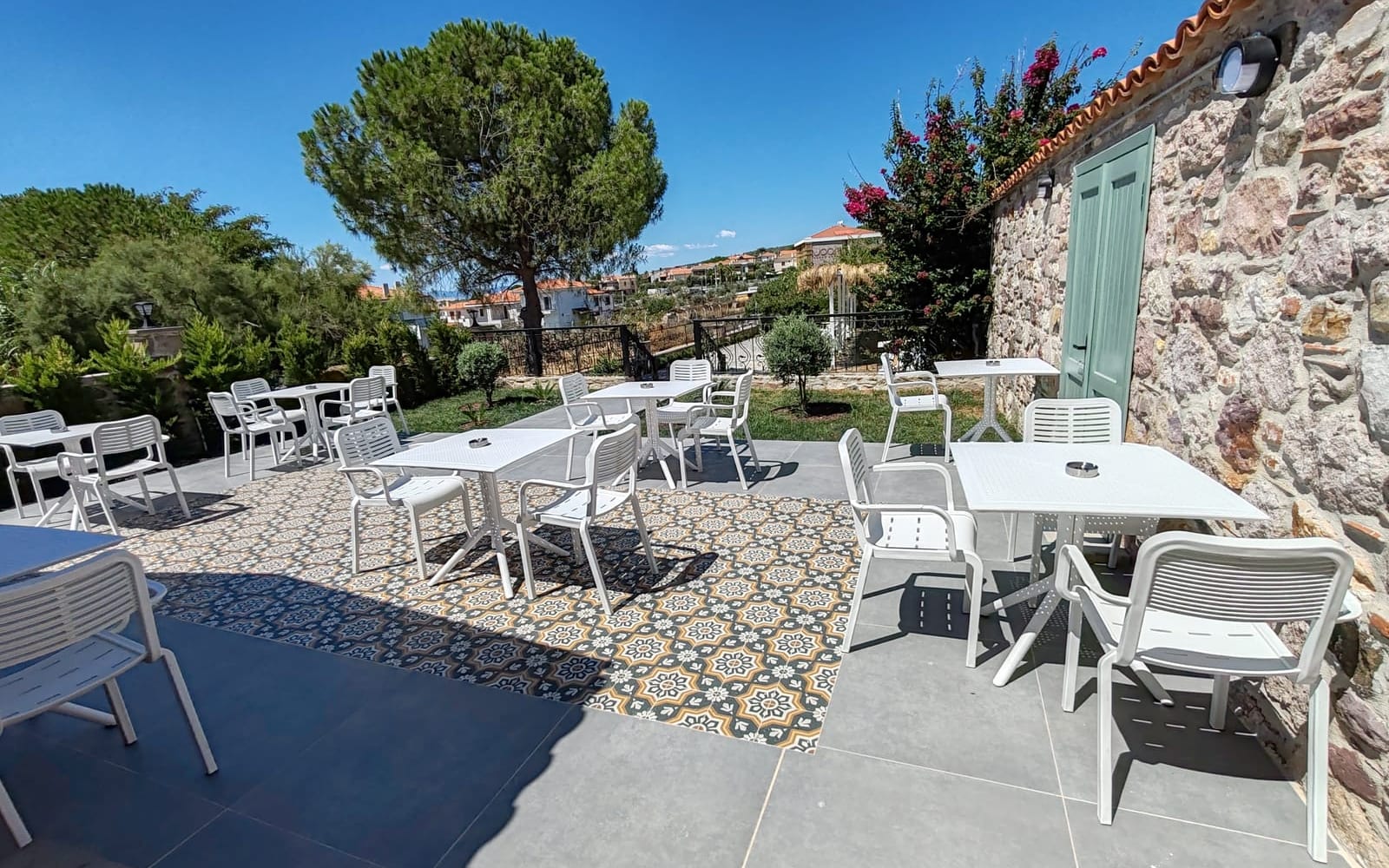
A traditional Aegean breakfast is built around local olive oil and olives, fresh village cheeses, tomatoes and greens, village eggs, thyme honey with clotted cream, and fresh bread — the style of breakfast served every morning in the courtyard at Cunda Milos.